
 Pin it
Polish white borscht, barszcz biały, is the soup my babcia ladled out every Easter morning while the ham rested and the table filled up with color. It has nothing to do with the ruby-red borscht most people picture. This one is pale, creamy, and sharp with horseradish, built on a broth loaded with smoky sausage and potatoes tender enough to fall apart on the spoon.
The tang comes from a soured base, either the traditional fermented rye starter called zakwas or a faster buttermilk version that gets you most of the way there on a weeknight. Either way, halved hard-boiled eggs go on top and a little more horseradish never hurts.
This version leans into smoke. Real Polish white sausage is worth seeking out if you have a butcher who carries it, but a good smoked kielbasa gets you a soup with real backbone in under an hour.
The Tangy, Smoky Lineup
Most of these are pantry regulars. The one special-trip item is real horseradish, the hot prepared kind kept in the fridge case, not the mild jarred version made for burgers. Buy sausage with a visible smoke ring through the wrapper. That tells you it was actually smoked and not just flavored.
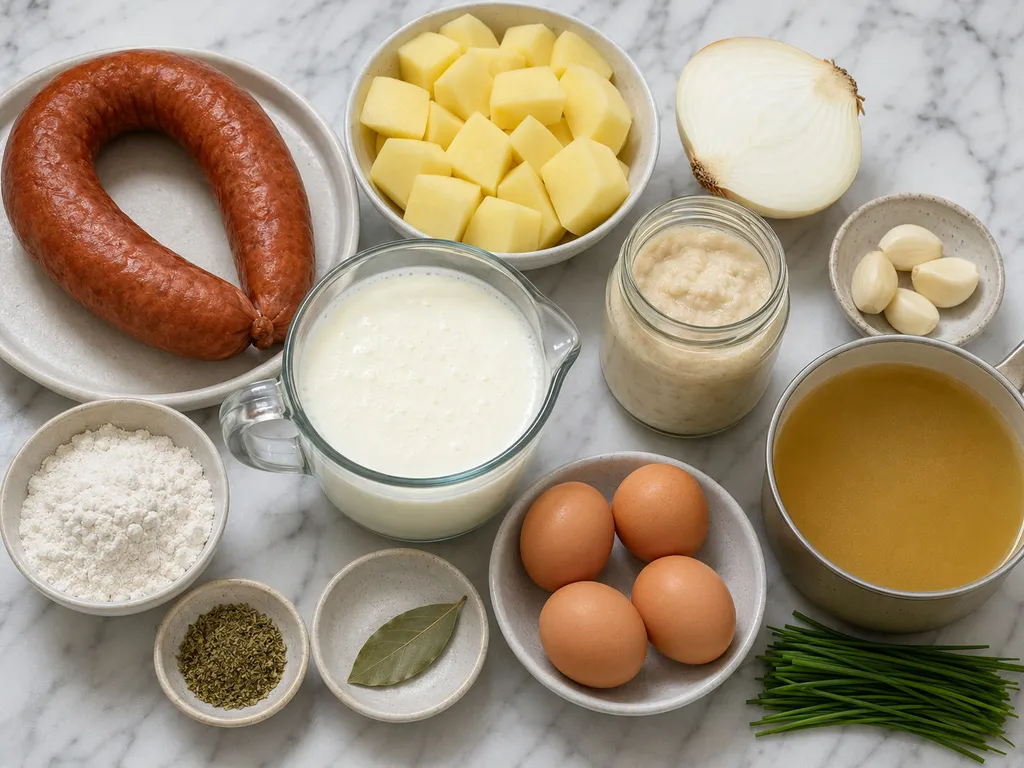
- Smoked kielbasa. The backbone of the broth, its fat and smoke flavor the whole pot as it simmers.
- Potatoes. They turn the broth into a real meal and soak up the tangy, smoky flavor as they cook.
- Onion and garlic. A quiet savory base that keeps the soup from tasting one-note.
- Chicken stock. The liquid foundation. Homemade or good store-bought both work fine.
- Bay leaf and dried marjoram. Marjoram is the herb that makes this taste unmistakably Polish. Don't skip it.
- Buttermilk. Gives the soup its tang and body without a multi-day fermented starter.
- Prepared horseradish. The sharp, sinus-clearing kick that defines white borscht.
- Flour. Whisked into the dairy so it thickens the broth instead of breaking.
- Hard-boiled eggs. Halved on top, they turn the soup into a full plate.
- Fresh chives or dill. A fresh, grassy finish against all that smoke and cream.
How the Soup Comes Together
- Boil the eggs. Cover eggs with cold water, bring to a boil, then remove from heat and let sit covered for 10 minutes before shocking in ice water and peeling.
- Build the broth. Sauté onion and garlic in a little oil until soft, then add the stock, bay leaf, and marjoram, and bring to a simmer.
- Simmer the sausage. Add the sliced kielbasa and let it simmer gently for 15 to 20 minutes so the broth picks up real smoke flavor.
- Cook the potatoes. Add the diced potatoes to the broth and simmer until fork-tender, about 10 to 12 minutes.
- Temper the dairy. Whisk the flour into the buttermilk until smooth, then stir in a ladle of hot broth to warm it before adding it to the pot. This keeps it from curdling.
- Finish the soup. Stir the tempered buttermilk mixture into the pot with the horseradish. Season with salt and pepper, then simmer gently for two minutes without letting it boil.
- Serve. Ladle into bowls, top each with halved hard-boiled eggs, and scatter with fresh chives.

Zakwas or a Quick Tangy Base
Traditional barszcz biały gets its sourness from zakwas, a rye flour and water mixture left to ferment on the counter for four or five days until it turns properly sour. It's the same lacto-fermentation that sours pickles and rye bread, giving the soup a deeper, slightly funky tang that buttermilk can't fully match. You can read more on how that fermentation works from the National Center for Home Food Preservation.
If Easter morning is closer than five days away, buttermilk with a splash of vinegar gets you most of the way there. It won't taste identical, but it will taste right. The same trade-off between quick and traditional souring shows up in creamy sour pickle soup, another Polish bowl that leans on fermented tang.
Why Marjoram Makes It Taste Right
Skip the marjoram and this tastes like a plain cream of potato soup. Add it and it suddenly tastes like Poland. Dried marjoram has a slightly bitter, resinous edge that cuts through all the cream and fat here, the same way it does in cabbage and sausage soup. Crush the leaves between your fingers before adding them. It wakes up the oils that have gone dormant in the jar.
Keeping the Broth From Curdling
Dairy soups break when hot liquid hits cold cream too fast. The fix is tempering. Whisk a ladle of the hot broth into the buttermilk first, then pour that warmed mixture back into the pot. Keep the heat low once the dairy is in, and never let the soup reach a hard boil again.
Rounding Out an Easter Table
White borscht traditionally opens an Easter breakfast alongside cold cuts, rye bread, and a jar of good mustard. If you're building out the rest of the table, cold beet soup covers the other end of the borscht family. Dill and potato soup is an easy second pot if you're feeding a crowd. You'll be boiling a big batch of eggs either way, and the USDA shell egg guide has solid advice on cooking and cooling them safely.
Storing and Reheating Leftovers
Keep leftovers in an airtight container in the fridge for up to three days. The soup thickens as it sits, so reheat it gently on the stove with a splash of stock or milk to loosen it back up. Stir often over low heat. Dairy soups scorch and separate fast over high heat.
Easy Swaps if You're Short an Ingredient
No Polish kielbasa nearby? Any good smoked sausage works, andouille included, though it pushes the flavor in a spicier direction. Swap the chicken stock for vegetable stock and skip the sausage for a vegetarian version, then finish with smoked paprika to fake back some of that missing smoke. Out of buttermilk, whisk sour cream with a little milk and a squeeze of lemon until pourable.

Najczęściej zadawane pytania
- What does Polish white borscht taste like?
It's tangy and creamy at once, with a smoky backbone from the sausage and a sharp kick from horseradish. Think of it as somewhere between a sour cream soup and a hearty potato chowder, with none of the sweetness people expect from red borscht.
- Can I make white borscht without zakwas?
Yes. Buttermilk mixed with a little vinegar or lemon juice gets you a similar tang without the days of fermenting. It won't be identical to a version made with real zakwas, but it makes a genuinely good soup on a normal weeknight.
- What sausage should I use?
Traditional recipes call for biała kiełbasa, raw Polish white sausage, simmered straight in the broth. If you can't find it, a good smoked kielbasa works well and actually leans into the smoky flavor this version is built around.
- Can I make this soup ahead of time?
Make the broth, sausage, and potatoes a day ahead and refrigerate them. Add the buttermilk mixture and reheat gently just before serving, then top with freshly halved eggs so they don't sit soaking in the soup.
- How is white borscht different from żurek?
They share the same sour rye base, but żurek is usually built around white sausage and more of that sour base, while barszcz biały leans creamier with buttermilk or cream and always includes potatoes. Both show up on the Easter table, often side by side.
- Can I freeze white borscht?
It's not a great candidate for the freezer. The dairy tends to separate once thawed and reheated, leaving a grainy texture. It keeps well in the fridge for a few days instead, which is usually enough for a holiday leftover.
- How do I scale this up for a crowd?
Double the broth, sausage, and potatoes, but add the buttermilk mixture in the same ratio, about a cup and a half of dairy per six servings. Taste before adding more. Too much tips the balance from tangy to sour.