
 Przypnij
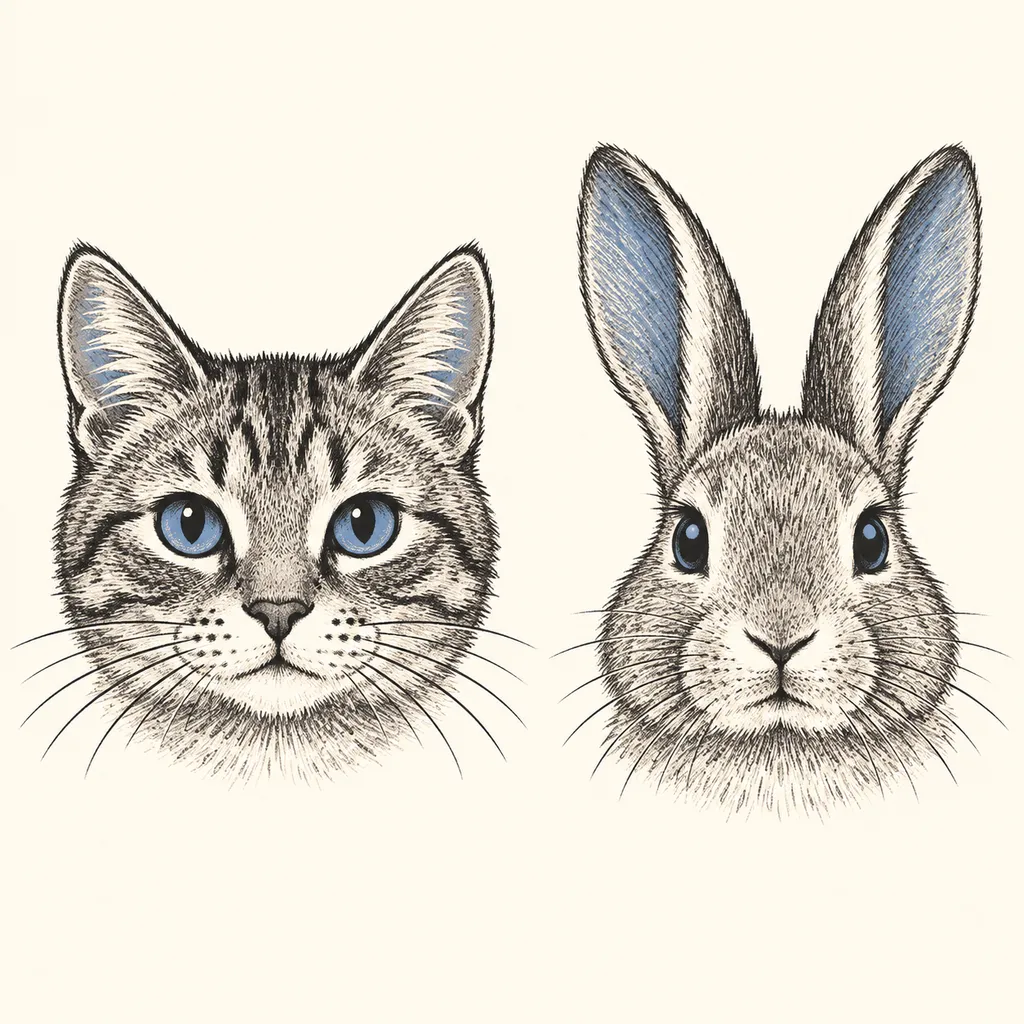
A cat-or-rabbit picture can be an interesting visual puzzle, but noticing one animal first does not, by itself, establish a personality trait. Ambiguous figures show how the same visual pattern can support different interpretations. University teaching materials illustrate this with reversible faces, vases, cubes, and animal drawings. The University of Illinois explanation of multistable perception describes this switching between interpretations.
There is one essential limitation here: the supplied material describes a cat-or-rabbit image, but does not include the image itself. We therefore cannot identify its artist, inspect its outlines, or confirm that both animals are visible. What we can explain is the perceptual principle behind such puzzles and how to evaluate the claims attached to them.
What is known about this particular puzzle
The description presents a simple question: do you notice a cat or a rabbit first? It then assigns different character descriptions to the two answers. These are two separate propositions. One concerns what a drawing looks like; the other concerns what a response supposedly reveals about a person.
Without the actual artwork, even the first proposition remains unverified. A title cannot show whether the picture contains a shared outline, overlapping animals, a rotated silhouette, or an ordinary photograph taken from an unusual angle. Each would require a different explanation.
The appropriate starting point is therefore conditional: if the drawing genuinely supports both animals, it belongs to the broader family of ambiguous images. That does not identify it as any particular famous illusion. It also leaves open the possibility that the caption describes the artwork inaccurately. A useful explanation should preserve that uncertainty rather than invent locations for ears, whiskers, or a nose.
How one pattern can support two interpretations
Seeing involves organizing visual information into objects, surfaces, and backgrounds. A flat drawing may leave some of those relationships unresolved. Its lines can fit more than one plausible arrangement, especially when details that would distinguish the alternatives are missing.
The City University of New York's perception textbook explains that our visual system receives two-dimensional images while interpreting a world with depth, shape, and movement. It also describes figure-ground separation: deciding which parts of a scene belong to an object and which belong to its background. CUNY's chapter on perceptual ambiguity provides the underlying explanation.
For an animal puzzle, the practical question is which marks support each proposed animal. A convincing alternative should account for the drawing's main features. Simply naming a second animal does not establish that the image contains a coherent second reading. The visible evidence still matters.
A clear example: the vase and the faces
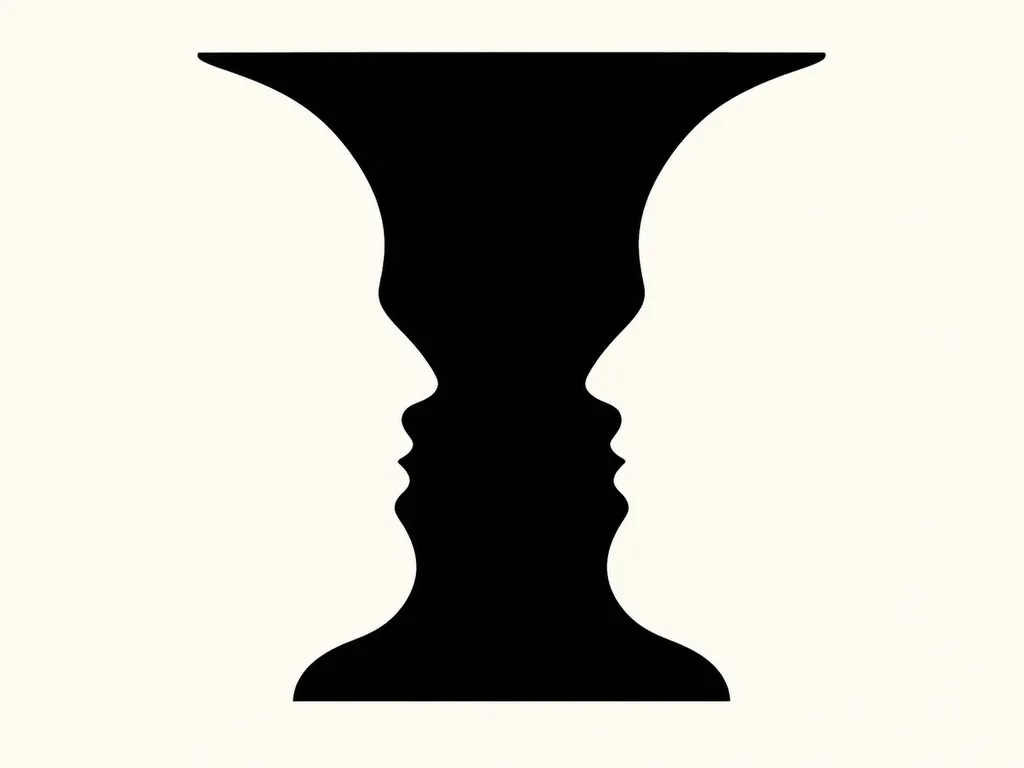
The classic face-vase figure makes ambiguity easier to understand. A central shape can appear to be a vase, while the surrounding shapes can appear to be two faces in profile. The boundary separating the regions serves different roles depending on which region becomes the foreground.
Hanover College's teaching demonstration explains that viewers can alternate between these organizations. In this figure, the shared border is assigned to one interpretation or the other rather than both simultaneously. Hanover's face-vase demonstration also lets users explore changes that make either reading more prominent.
This supplies a useful question for the cat-or-rabbit puzzle: does the alternative depend on reorganizing the same contours? If so, the interesting event is a change in interpretation. If two separate animals are simply hidden in different corners, the task is instead a search for objects. Those experiences may both be entertaining, but their explanations differ.
Animal ambiguity is not always the same illusion
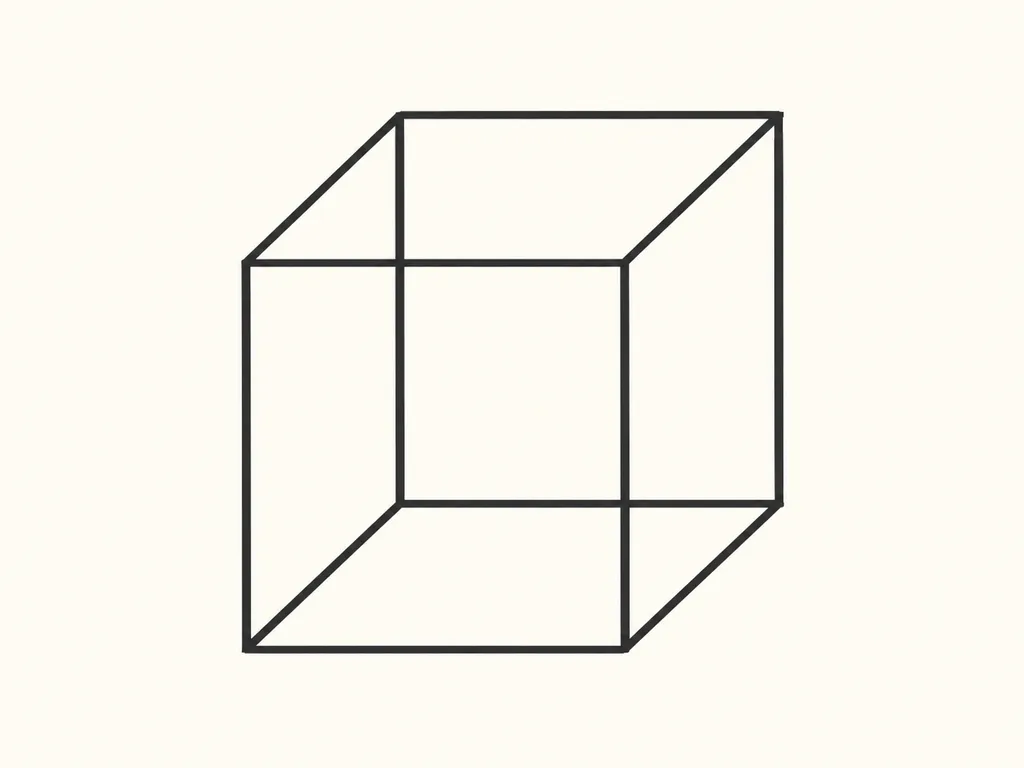
A well-documented animal example is the duck-rabbit figure. University of Illinois teaching material describes a drawing that can be perceived as either animal. The same page explains the Necker cube, whose lines allow different faces to appear closest to the viewer. These are examples of bistable perception, the two-interpretation case within multistable perception. The Illinois account distinguishes the terminology.
Neither example verifies the missing cat-or-rabbit picture. In particular, replacing the word cat with duck would silently change the puzzle. Similar captions can circulate with different artwork, so the image and its accompanying claim should be checked together.
A good explanation identifies the actual competing readings and the features they share. It does not borrow a famous illusion's history or solution merely because both pictures involve a rabbit.
Context can make one reading more available
An ambiguous image does not always arrive without clues. Its title may name an animal before you see it. Nearby pictures may suggest a category. A friend may point out a particular feature. These details should be recorded when discussing a first impression.
The Stanford Encyclopedia of Philosophy illustrates contextual influence by placing the ambiguous duck-rabbit among different groups of animals. The surrounding creatures encourage the interpretation that fits the group. It also gives an example of an ambiguous character interpreted differently among letters and numbers. Stanford's discussion of perception and context explains these demonstrations.
The relevant distinction is between an observation and its possible explanation. Someone can accurately report seeing a rabbit first without establishing why that happened. Context is one factor worth considering, rather than a complete explanation for every individual response. Knowing which labels a viewer encountered helps make comparisons more informative.
Changing your interpretation is different from changing the picture
In a reversible figure, the visual pattern can remain unchanged while its perceived organization shifts. Berkeley's perception teaching notes contrast this with situations where perception stays relatively constant despite changes in the visual input. The notes use the vase and Necker cube to illustrate reversibility. Berkeley's section on reversible figures explains that distinction.
For a casual puzzle, keep track of what you actually did. Looking again at the same image is different from rotating it, enlarging it, covering a region, or opening a less cropped version. Those manipulations may be useful, but they change the viewing conditions.
If an alternative appears after a friend points to a feature, report that detail too. A precise account might say that you initially noticed one animal and recognized the other after a hint. That is more useful than compressing several different experiences into a single answer.
Why a personality description can feel convincing
A description can feel personally accurate without demonstrating that the image response predicted it. This matters when a puzzle follows an animal choice with broad statements about how someone thinks or behaves.
California State University, Fullerton's teaching page describes a Barnum-effect demonstration. Participants receive what appears to be an individual personality description, rate its accuracy, and later learn that everyone received the same description. The exercise illustrates how a shared profile can be experienced as personally fitting. Fullerton's Barnum demonstration explains the setup.
That principle does not prove how every reader will react to this particular puzzle. It gives a useful check: would the other animal's description also seem applicable? Another question is whether the wording identifies an observable behavior, situation, and frequency. A statement that accommodates many different experiences provides little basis for distinguishing the two groups.
What evidence would a personality claim need?
A meaningful assessment needs evidence connecting its response to the characteristic it claims to measure. The supplied material provides no validation for its cat-or-rabbit personality mapping, and the perception sources reviewed here do not establish that mapping.
The US Office of Personnel Management's assessment guidance distinguishes reliability, or consistency, from validity evidence supporting an assessment's intended use. Its examples concern employment assessments, so they should not be mistaken for an evaluation of this image. They nevertheless illustrate why consistent responses and justified conclusions are separate requirements. OPM's assessment strategy guidance explains both concepts.
Applied to this claim, useful research would specify the exact drawing, instructions, response recording, and independently measured traits. It would also explain who participated and how results were checked. A collection of comments saying that descriptions feel accurate cannot answer those questions. Until relevant evidence is available, the personality interpretation should be treated as entertainment.

A useful way to compare what people see
If you obtain the original image, turn the discussion into a small observation exercise. The purpose is to describe responses carefully, not to sort friends into personality categories. Agree on a neutral question such as what the picture resembles, and allow an uncertain answer.
- Show everyone the same uncropped version, with the same orientation.
- Keep animal labels and explanatory captions out of the initial viewing.
- Ask each person to record an answer privately before discussing it.
- Accept another interpretation, several possibilities, or no recognizable animal.
- Afterward, compare the specific lines or shapes each person used.
- Record whether an alternative appeared independently or after a hint.
These are practical suggestions for making the conversation clearer, not a validated research protocol. A small group cannot establish how the general population responds. Nor does a majority vote prove that a minority interpretation is visually impossible. The most useful outcome is an explanation of the features supporting each answer, together with an honest record of the conditions.
Inspect the artwork before accepting its caption
When the image is available, separate three questions: what is visibly present, what interpretation it supports, and what the caption adds. For example, a viewer might identify two elongated shapes, interpret them as ears, and then encounter a personality description. Only the first two concern the drawing.
Check whether the second interpretation explains the entire main outline or relies on ignoring inconvenient details. If someone offers a hint, ask them to point to the shared feature rather than repeat the animal's name. This makes disagreement discussable.
Also distinguish evidence about the artwork from evidence about its circulation. A caption calling it famous supplies no documented history. A claim that most viewers choose one animal needs actual response data. If no source is given, leave those claims unresolved. You can still enjoy the puzzle while describing it accurately. For this missing image, those checks remain tasks for whoever later obtains the original artwork.
Keep the puzzle enjoyable and the conclusions proportionate
An effective discussion invites people to explain their reading and consider alternatives. Avoid assigning a better personality, greater creativity, or superior intelligence to either answer. The available evidence does not justify those rankings for this puzzle.
You can make the exchange more interesting by asking what changed after a hint, which feature carried the interpretation, and whether everyone was looking at the same version. These questions keep attention on evidence that participants can inspect together.
For another kind of challenge, explore the site's order-of-operations puzzle or its tomato-placement puzzle. Read each task's instructions on its own terms. An ambiguous-image discussion is especially useful when it ends with a clearer description of the drawing, rather than a label attached to the viewer.
Podsumowanie
The cat-or-rabbit premise points toward a visual ambiguity puzzle, but its precise solution remains unverified without the original image. Established demonstrations show how one pattern can support competing interpretations and how context can influence what viewers perceive. The separate claim that an animal choice reveals personality needs its own evidence. A useful response is to inspect the contours, record viewing conditions, and keep conclusions tied to what was actually observed.
Najczęściej zadawane pytania
Where are the cat and rabbit in the original picture?
The original picture was not included in the supplied material. Its features therefore cannot be located or verified. Any explanation identifying particular ears, whiskers, or outlines would be speculative. The illustrations accompanying this article explain related principles rather than reproduce that missing artwork.
Does an ambiguous picture always have two correct answers?
No. Multiple interpretations must be supported by the actual image. A caption naming two animals does not establish that both readings work. For the described puzzle, confirming the alternatives requires inspecting the original drawing and identifying the features that support each animal.
Is the cat-or-rabbit puzzle the classic duck-rabbit illusion?
That cannot be established from the supplied description. The classic duck-rabbit has different named alternatives and appears in University of Illinois teaching material. A shared reference to a rabbit is insufficient to identify two images as the same artwork.
Can I share my first answer without accepting the personality description?
Yes. Report the animal you noticed and, if useful, explain the feature that suggested it. You can also mention whether you had already read the caption. Describing a visual experience does not require accepting a further claim about your character.
Źródła
Rzetelne źródła pomogły w opracowaniu i dopracowaniu tej treści.
- https://msl.cs.uiuc.edu/vr/node188.html
- https://pressbooks.cuny.edu/sensationandperception/chapter/perception-is-ambiguous
- https://isle.hanover.edu/isle2/Ch09Attention/Ch09VaseFace.html
- https://plato.stanford.edu/archives/sum2006/entries/relativism/supplement1.html
- https://www.ocf.berkeley.edu/~jfkihlstrom/IntroductionWeb/perception_supplement.htm
- https://psych.fullerton.edu/mbirnbaum/teaching/psych101/barnum_demo.htm
- https://www.opm.gov/policy-data-oversight/assessment-and-selection/assessment-strategy