 Pin it
Ask five Polish grandmothers for their bigos recipe and you'll get five different answers. All five will insist theirs is the only correct one. That's not a contradiction. It's the entire point of the dish.
Bigos started as a way to use up whatever meat, cabbage and dried mushrooms were sitting in the pantry before they went bad. It never really stopped being that. What stays constant is sauerkraut simmered low with meat for hours until the sour and the savory settle into each other.
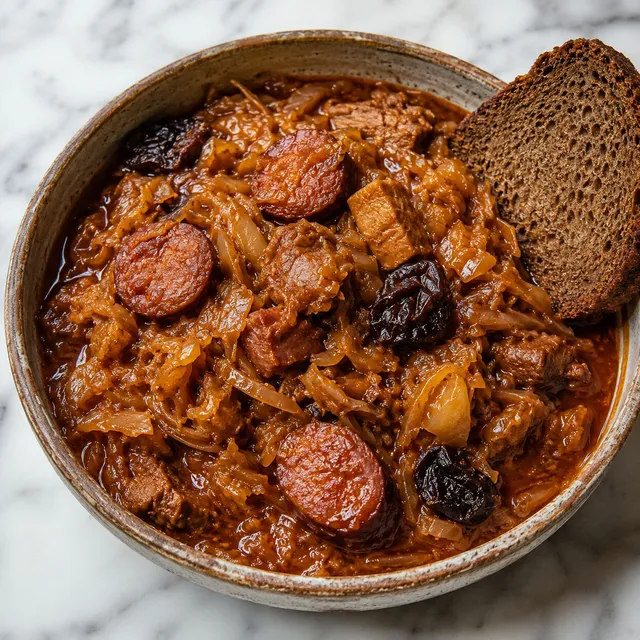
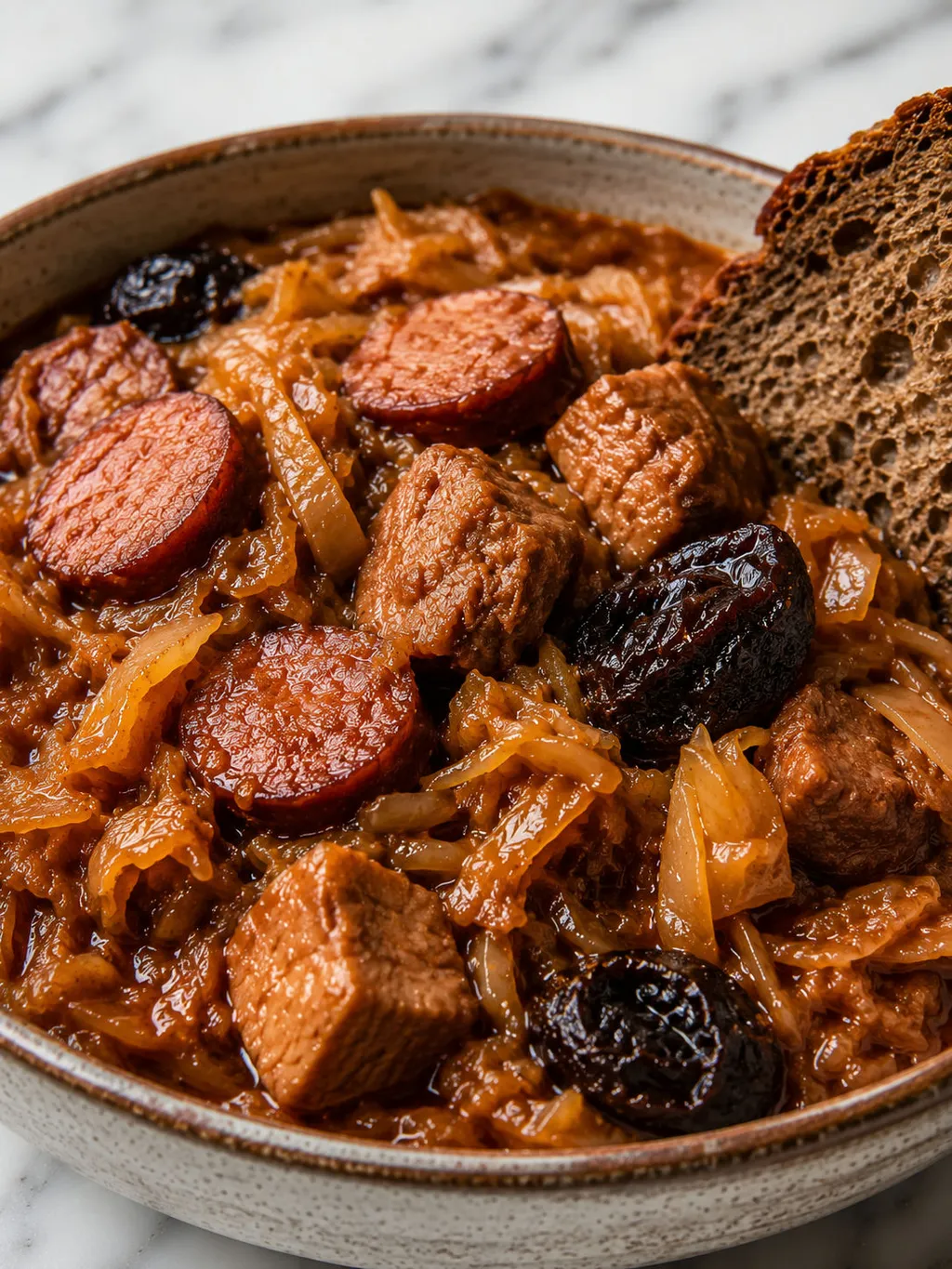
This version leans on pork shoulder, smoked kielbasa, dried mushrooms and a handful of prunes for a little sweetness under the tang. It asks for patience more than skill. Once the pot is simmering, your main job is to walk away and let time do the work.
Building A Proper Pot Of Bigos
Bigos rewards good raw materials more than exact measurements. Look for real fermented sauerkraut with a sharp tang instead of the mild jarred kind, and choose a kielbasa with real smoke and fat running through it.
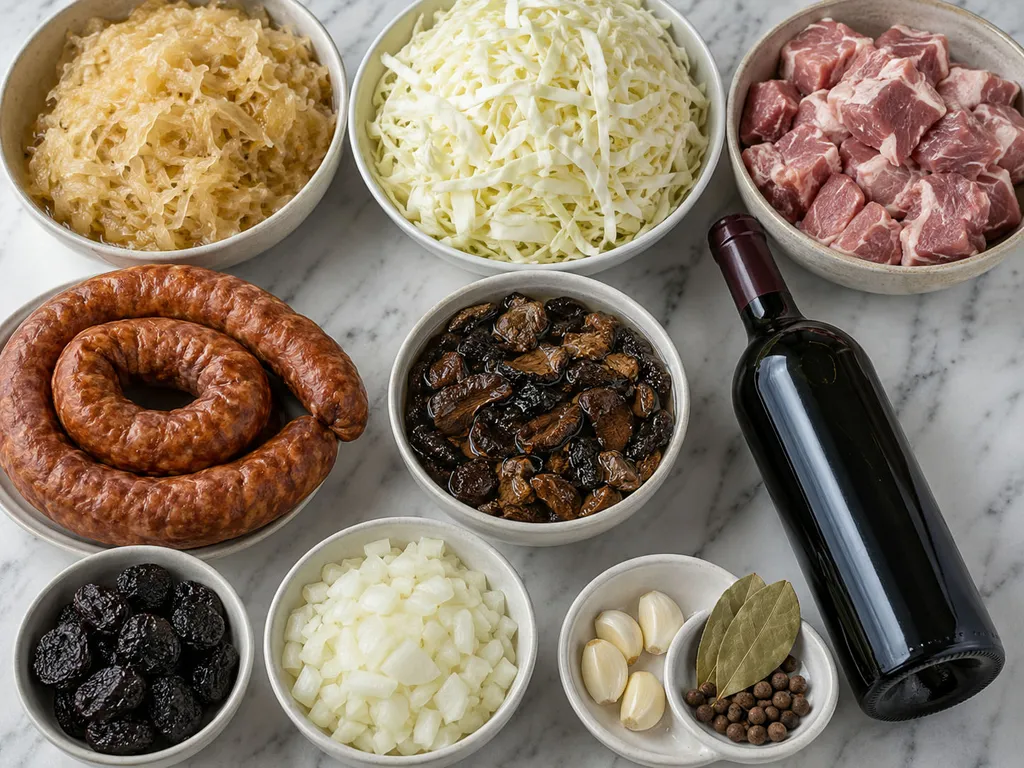
- Sauerkraut. The backbone of the stew, its sour brine mellows into something deep and savory after hours of simmering.
- White cabbage. Balances the kraut's sharpness and softens into the pot without turning to mush.
- Pork shoulder. Gives the stew body and stays tender through the long, slow cook.
- Smoked kielbasa. Adds a savory, smoky note that seasons the whole pot as it simmers.
- Dried wild mushrooms. Soaked and chopped, they bring an earthy backbone that fresh mushrooms can't match.
- Prunes. A small, unexpected sweetness that rounds out the sour and salty edges.
- Onion and garlic. Build the savory base that the meat and kraut simmer into.
- Bay leaves and allspice. The classic Polish stew spices, added whole and fished out before serving.
- Red wine. Deglazes the pot and adds depth, though a splash of stock works if you'd rather skip it.
How The Pot Comes Together
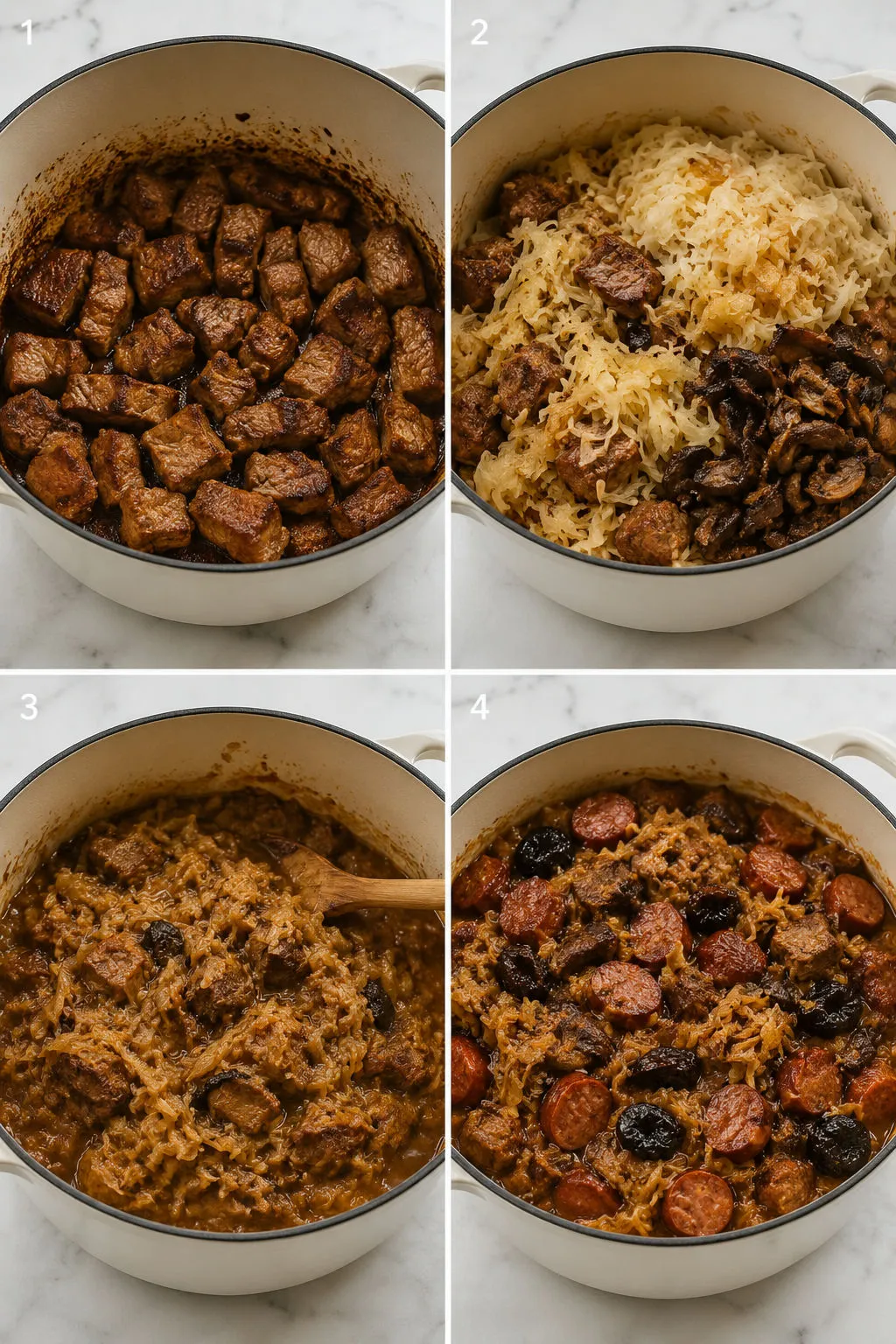
- Brown the meat. Sear the seasoned pork shoulder in batches over high heat until deeply colored on all sides, then set it aside. Browning first builds a savory base you can't get any other way.
- Soften the aromatics. Lower the heat and cook the onion in the same pot until soft and golden, scraping up any browned bits stuck to the bottom.
- Build the stew base. Add the sauerkraut, shredded cabbage, soaked mushrooms with their soaking liquid, garlic, bay leaves and allspice, then return the pork to the pot with the wine.
- Simmer low and slow. Partially cover the pot and let it simmer for at least two hours, stirring occasionally so nothing catches on the bottom.
- Add the kielbasa and prunes. Stir in the sliced kielbasa and chopped prunes for the final thirty minutes, just long enough for the sausage to heat through.
- Rest before serving. Pull the pot off the heat and let it sit for at least fifteen minutes, or better, refrigerate it overnight and reheat the next day.
Why No Two Pots Of Bigos Match
Every family's bigos recipe is a little different, and that's the tradition working exactly as intended. What stays fixed is the ratio of sauerkraut to meat and the long, slow simmer that lets the flavors merge. Everything else bends to what's in the kitchen.
Some cooks lean on wild boar or venison the way hunters originally did. Others use whatever pork and sausage the butcher has that week. Mushrooms can be fresh or dried, wine can be red or skipped for stock, and the sweetness from prunes can just as easily come from apples or a spoon of jam. According to Culture.pl, bigos has shifted with whatever ingredients were on hand across centuries of Polish cooking, from nobility's game-heavy pots to humbler versions built on cabbage and scraps of meat. That flexibility is why no two households, and no two pots, ever taste quite the same.
The Case For Day-Old Bigos
Bigos is famous for tasting better on the second and third day, and that's not just nostalgia talking. As the pot cools and reheats, the sauerkraut keeps releasing its acid and the meat keeps absorbing it, so the sharp edges of the sour cabbage round out into something deeper.
Traditional cooks used to simmer bigos over two or three separate days for exactly this reason, cooling it overnight between sessions. If you have the patience, cook it a day ahead of when you want to serve it and reheat gently on the stove. Our other bigos recipe leans even further into this slow-build approach if you want to see how far the flavor can develop.
Meat And Sausage You Can Swap
Pork shoulder and smoked kielbasa are the easy, everyday choice, but bigos was originally a hunter's dish built on whatever game was in the bag. Venison, wild boar or even duck all work if you can get them, though you'll want extra fat since game meat runs leaner than pork.
For the sausage, any well-smoked kielbasa or even a good chorizo does the job, since the fat it renders seasons the whole pot. Vegetarian versions exist too, built on mushrooms and smoked paprika instead of meat, though the texture and depth change quite a bit without it. Whatever you choose, cut it into bite-sized pieces so every spoonful gets a bit of everything.
Serving Bigos Like The Poles Do
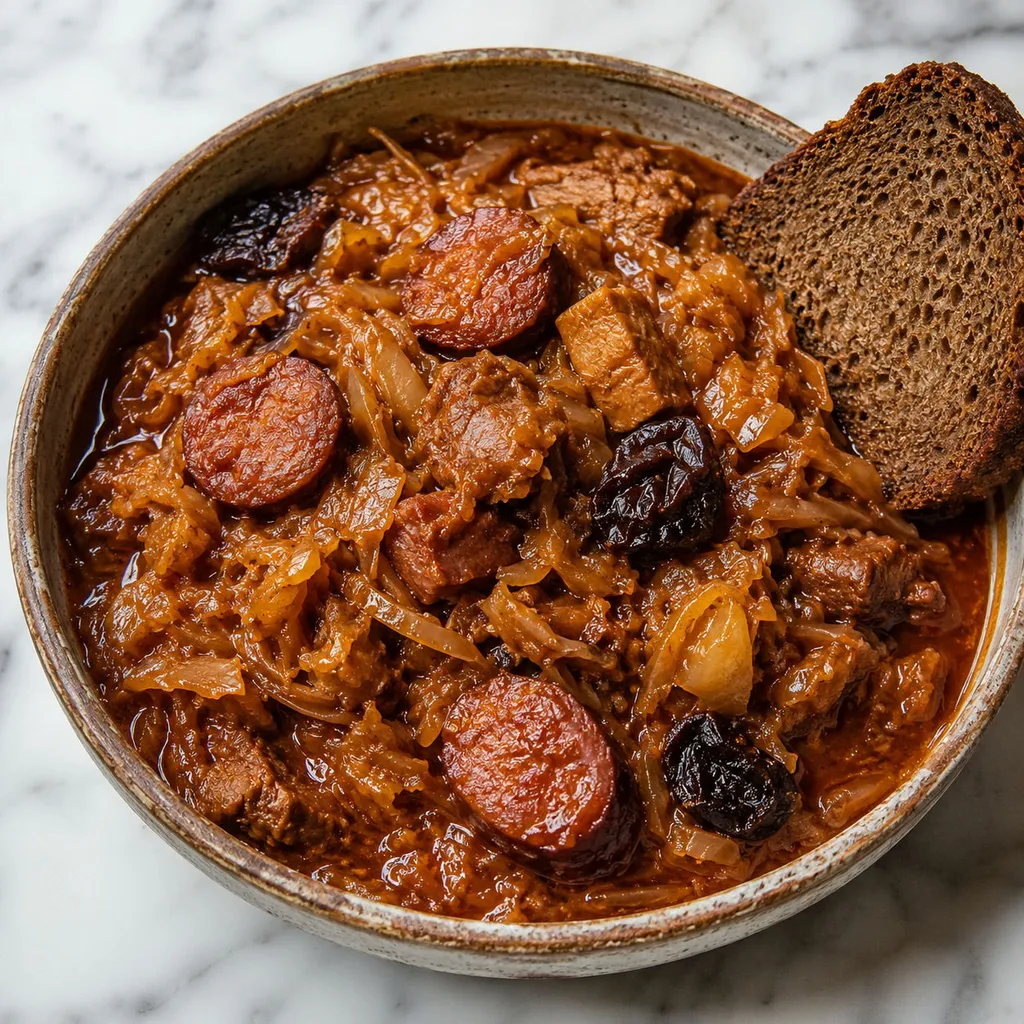
Bigos is usually served in a deep bowl with dark rye bread on the side for mopping up the broth. A cold glass of something crisp cuts through the richness nicely. If you want a full Polish spread, a side of kluski z serem or simple roasted garlic potatoes rounds things out well. Bigos also holds up fine as a main on its own, especially in colder months when a heavy, warming bowl is exactly what you want.
Storing Freezing And Reheating Safely
Bigos keeps well because the sauerkraut acts as a natural preservative, but you still want to handle it like any cooked meat dish. Cool it fully before refrigerating, and store it in an airtight container for up to five days.
It also freezes beautifully for up to three months, since the sauerkraut and cabbage hold their texture better than most stews do after thawing. Reheat it gently on the stove until it's steaming hot all the way through. The USDA recommends reheating leftovers to an internal temperature of 165°F to keep them safe.
The Mistakes That Flatten The Pot
The most common mistake is rushing the simmer. Bigos needs at least two hours on low heat for the flavors to actually merge, and cutting that short leaves it tasting like sauerkraut soup with meat floating in it rather than one unified stew.
Skipping the initial sear on the pork is another shortcut that costs you real flavor, since that browned crust is where a lot of the savory depth comes from. Too much fresh cabbage and not enough sauerkraut throws off the balance too, leaving the dish sweet instead of tangy. And don't skip the rest before serving. Bigos, like most long-simmered stews, needs a few minutes off the heat for the fat and broth to settle back into the meat before you ladle it out.
Najczęściej zadawane pytania
- Why does bigos taste different from one household to the next?
Bigos was built to use up whatever meat, cabbage and mushrooms were on hand, so recipes vary by family, region and even season. The only real constants are sauerkraut and a long, slow simmer.
- Can I make bigos without wine?
Yes. Swap the red wine for beef or mushroom stock in the same amount. You'll lose a little depth, but the sauerkraut and mushrooms still carry plenty of flavor on their own.
- How long does bigos need to simmer to taste right?
Plan on at least two hours at a gentle simmer, though three hours gets you closer to the deep, melded flavor bigos is known for. Longer, slower cooking almost always makes it better.
- Can bigos be frozen?
Yes, and it freezes unusually well thanks to the sauerkraut. Cool it completely, portion it into airtight containers, and freeze for up to three months. Thaw in the fridge overnight before reheating.
- What can I use instead of kielbasa?
Any well-smoked sausage works, including a good chorizo or a smoked bratwurst. Look for something with real fat and smoke, since it seasons the whole pot as it cooks.
- Is bigos traditionally made with game meat?
Historically yes. Hunters made early versions with venison, wild boar or whatever they'd caught that day, which is where the "hunter's stew" nickname comes from. Most home cooks today use pork and kielbasa instead.