
 Pin it
Jajecznica is the dish most Polish grandmothers make without ever glancing at a recipe. Eggs go soft and glossy, kielbasa turns a little crisp at the edges, and the onion melts into something sweet enough to eat with a spoon. It's Sunday breakfast, a hangover fix, and a fast weeknight dinner all in one.
This version leans into the smoky sausage and slow-cooked onion, the two things that separate great jajecznica from plain scrambled eggs. Give the onion real time in the pan and keep the heat low once the eggs go in. That's really the whole trick.
What Goes Into the Skillet
A short list of pantry staples does the heavy lifting here. Buy real smoked kielbasa if you can find it, plus a sweet yellow onion. Both carry the whole dish.
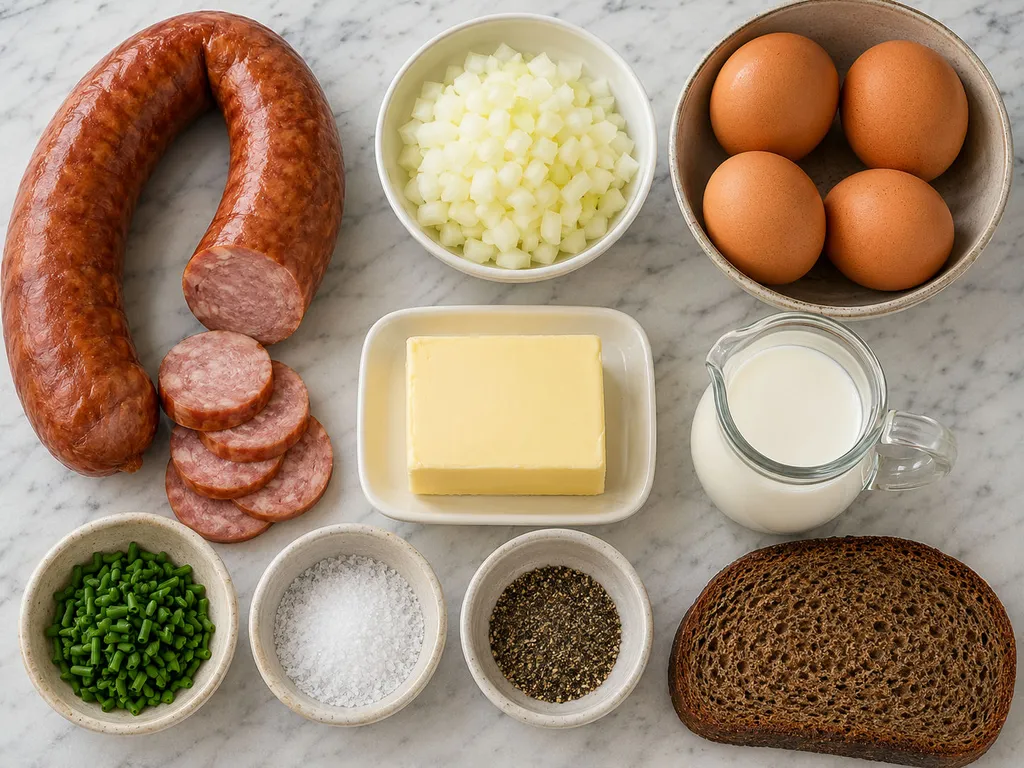
- Smoked kielbasa. Diced small so every bite gets a smoky, slightly crisp piece.
- Yellow onion. Cooked low and slow until soft and sweet, it's the base flavor of the whole pan.
- Butter or lard. Traditional Polish kitchens reach for lard, but butter works just as well for browning the kielbasa.
- Eggs. The main event. Use the freshest eggs you have for the best texture.
- Milk (optional). A small splash keeps the curds a touch softer, though many Polish cooks skip it entirely.
- Salt and black pepper. Season the eggs only at the very end so they don't turn watery.
- Fresh chives or dill. A scattering on top adds color and a clean, grassy finish.
- Rye bread. Not technically an ingredient in the pan, but no jajecznica plate is complete without a slice on the side.
From Cold Pan to Plate
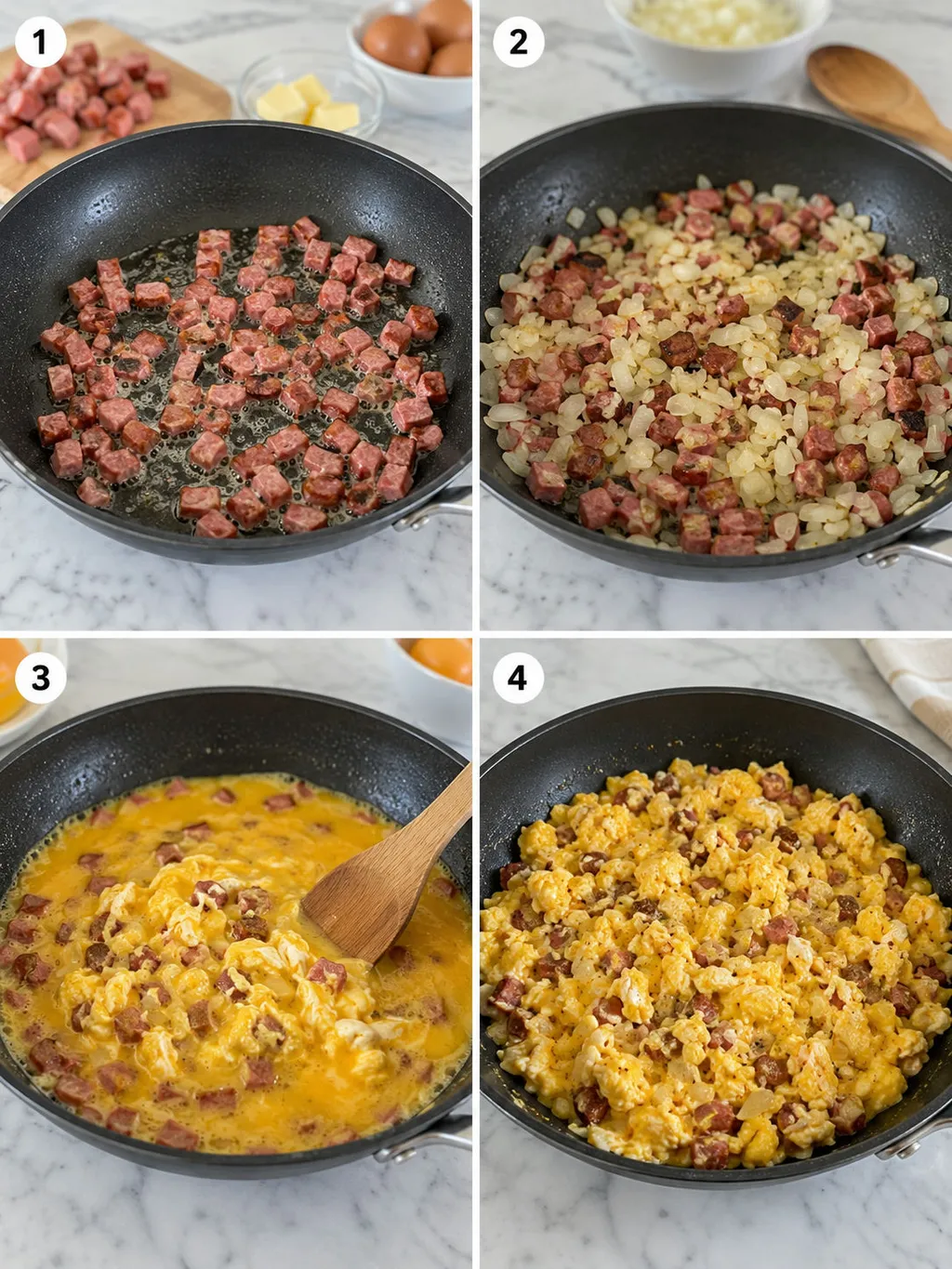
- Render the kielbasa. Melt the butter in a large skillet over medium heat, add the diced kielbasa, and cook until the edges brown and the fat starts to render, about 4-5 minutes.
- Soften the onion. Add the onion to the same pan, lower the heat, and cook slowly until it turns soft and golden, 6-8 minutes. Don't rush this part.
- Beat the eggs. Crack the eggs into a bowl with a pinch of salt and pepper, then whisk just until the yolks and whites are combined. Overbeating makes the curds tougher.
- Scramble slowly. Pour the eggs into the pan over low heat and stir gently and often, pulling the curds from the edges toward the center, until soft curds form, 3-4 minutes.
- Finish and serve. Pull the pan off the heat while the eggs still look a little glossy. They'll keep cooking from the residual heat. Scatter chives on top and serve immediately with rye bread.
Give the Onion Real Time
Most home versions of jajecznica rush the onion, and that's the difference between good and forgettable. Six to eight minutes over gentle heat turns a raw bite into something soft and faintly sweet, and that sweetness is what balances the smoky kielbasa. If the pan looks dry, add another small pat of butter rather than turning up the heat. A browned, bitter onion will throw off the whole dish. This classic jajecznica with kielbasa and onion follows the same principle, just with a slightly different ratio of sausage to egg.
Which Kielbasa to Buy
Traditional smoked kielbasa gives the best smoky flavor, and most Polish delis or well-stocked grocery stores carry one. Fresh white kielbasa works too, just cook it a minute or two longer since it starts raw. In a pinch, thick-cut bacon or diced ham makes a fair substitute, though you'll lose some of that specific smokiness. Skip pre-cooked hot dogs. They turn rubbery and don't brown the same way.
Why Low Heat Makes Soft Curds
Eggs are mostly protein and water, and heat is what squeezes that water back out. Push the pan too hot and the proteins seize fast, forcing out moisture and leaving you with dry, chalky curds. Keep the heat low and stir gently, and the proteins set slowly enough to trap that moisture inside, which is what gives jajecznica its soft, almost custardy texture. Serious Eats has a good breakdown of the science behind this if you want to go deeper.
How Poles Actually Serve It
Jajecznica rarely shows up alone. A thick slice of rye bread or soft braided chałka is standard, along with sliced tomato or a few pickles on the side for acidity. For a weekend spread, set it next to sweet cheese-filled naleśniki so the table covers both savory and sweet. If you love a fast savory egg breakfast, a fridge-clearing vegetable frittata is worth keeping in the weekend rotation too. Coffee or a glass of buttermilk rounds it out.
Storing and Reheating Leftovers
Jajecznica is best fresh. The curds firm up and the kielbasa loses its snap after a day in the fridge. Still, leftovers keep in an airtight container for up to two days. Reheat gently in a covered pan over low heat with a small splash of milk to loosen things back up. Stop as soon as it's warmed through since the residual heat will finish the job. The USDA recommends refrigerating cooked egg dishes within two hours of cooking.

Najczęściej zadawane pytania
- What is jajecznica?
Jajecznica is Poland's version of scrambled eggs, traditionally cooked in butter or lard and often studded with kielbasa and onion. It's a staple breakfast dish, especially on weekends, and shows up on nearly every Polish table in some form.
- Can I use bacon instead of kielbasa?
Yes. Dice thick-cut bacon and render it the same way you would kielbasa, cooking it until crisp before adding the onion. You'll lose some of the specific smoky kielbasa flavor, but the dish still works well.
- How do I keep the eggs from turning rubbery?
Cook them over low heat and stir gently rather than hard scrambling. Pull the pan off the heat while the eggs still look slightly underdone. They'll finish setting from residual heat within a minute.
- Can I make jajecznica without meat?
Yes, simply skip the kielbasa and cook the onion in butter until soft and golden before adding the eggs. Add a handful of mushrooms or a few slices of tomato for extra flavor if you like.
- What should I serve with jajecznica?
Rye bread, pickles, and sliced tomato are the classic sides. A slice of chałka or a cup of coffee rounds out a full Polish breakfast spread.
- Can I make it ahead of time?
Jajecznica really is best made fresh since the curds firm up quickly once cooled. If you need to prep ahead, dice the kielbasa and onion the night before so cooking only takes about ten minutes in the morning.
- Why did my jajecznica turn out watery?
Excess liquid usually comes from wet kielbasa or from onion that released moisture before it cooked down. Give the onion a few extra minutes uncovered to let steam escape before the eggs go in.