 Pin it
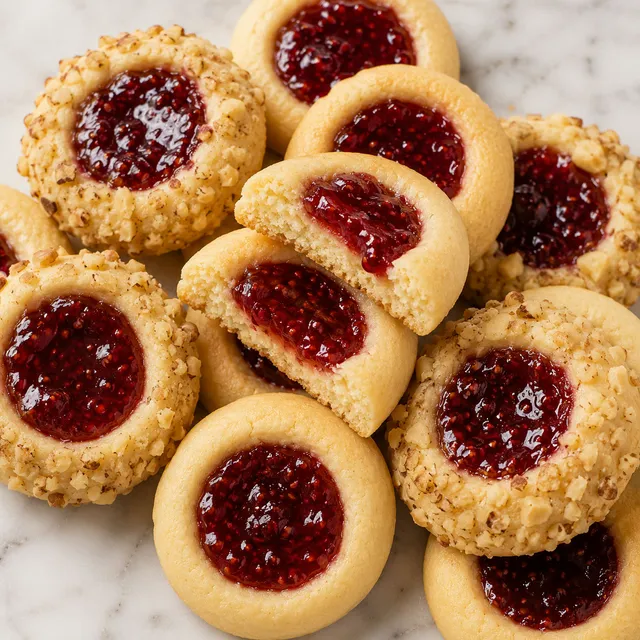
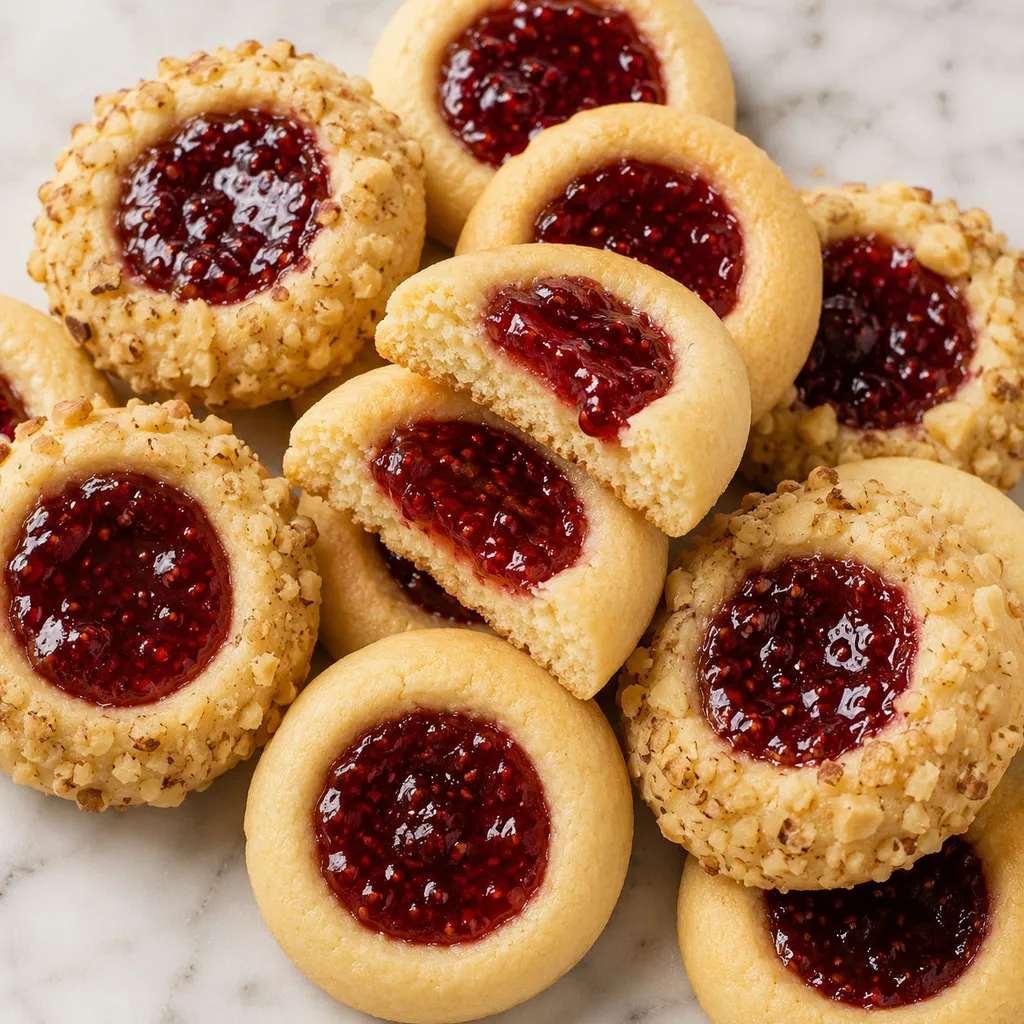
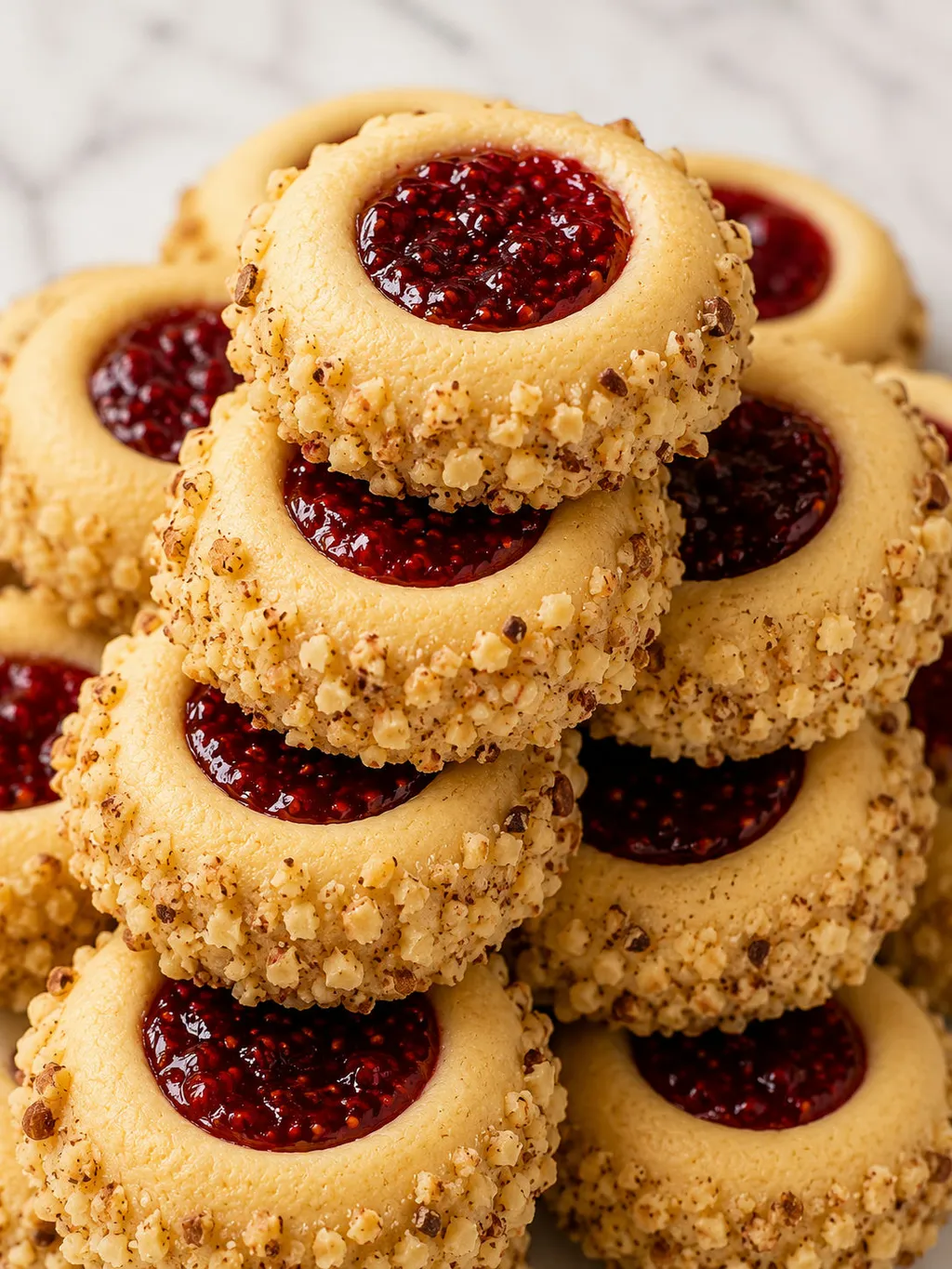
My babcia called these dżemowe oczka, jam eyes, because that's exactly what a tray of them looks like once the centers turn glossy in the oven. They're a shortbread-style cookie, rich with butter and egg yolks, with a thumb-pressed well holding a spoonful of tart jam.
They show up on Polish cookie platters around Christmas and Easter, but there's nothing that makes them seasonal. The dough takes one bowl, no fancy equipment, and the only real skill is pressing a clean indent that survives the oven.
Everything This Buttery Dough Needs
The whole recipe rests on a handful of pantry staples, so buy the best butter you have and a jam with real fruit in it. Cold eggs separate more cleanly than room-temperature ones, which makes reserving the yolks easier.
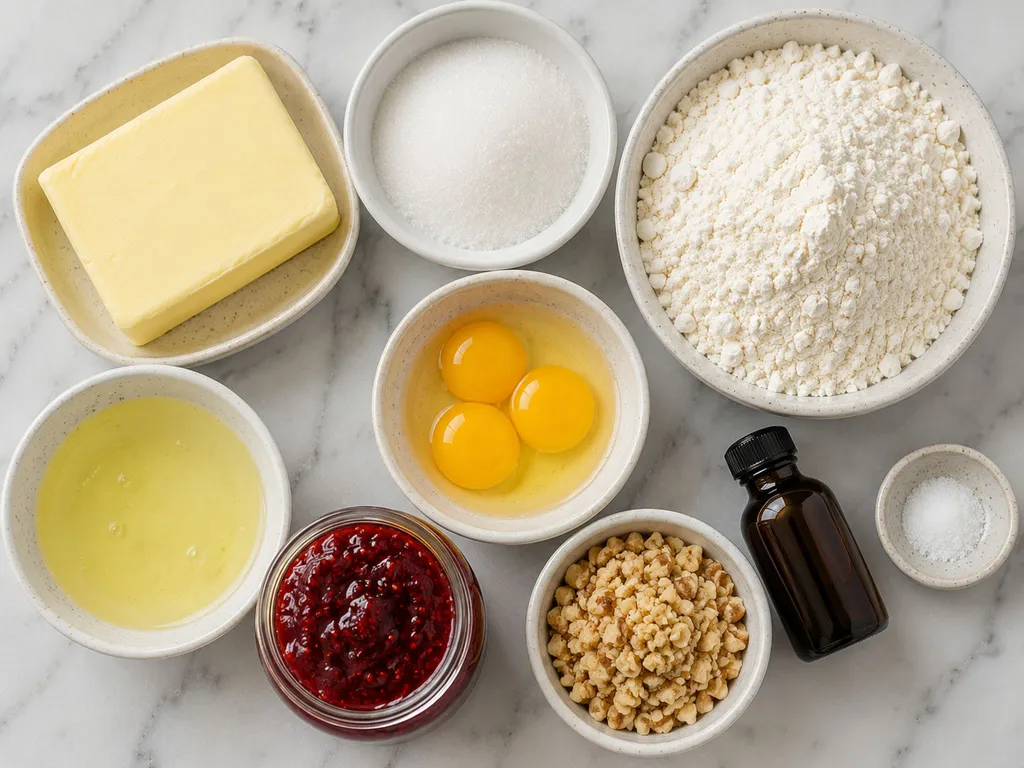
- Unsalted butter. Softened but still cool, it creams into the sugar to give the dough its tender, sandy crumb.
- Granulated sugar. Just enough to sweeten the dough without competing with the jam.
- Egg yolks. They enrich the dough and keep it from spreading in the oven, this is what gives dżemowe oczka their firm, shortbread texture.
- Vanilla extract. A background note that rounds out the butter.
- All-purpose flour. The structure of the dough, measured by spooning and leveling so it doesn't pack in dense.
- Salt. A pinch to sharpen the sweetness.
- Thick jam. Raspberry, apricot, or plum powidła for the filling, the star of every cookie.
- Egg white and chopped walnuts. Optional, for rolling the dough balls in before baking, a traditional Polish coating that adds crunch.
From Creamed Butter to Golden Edges
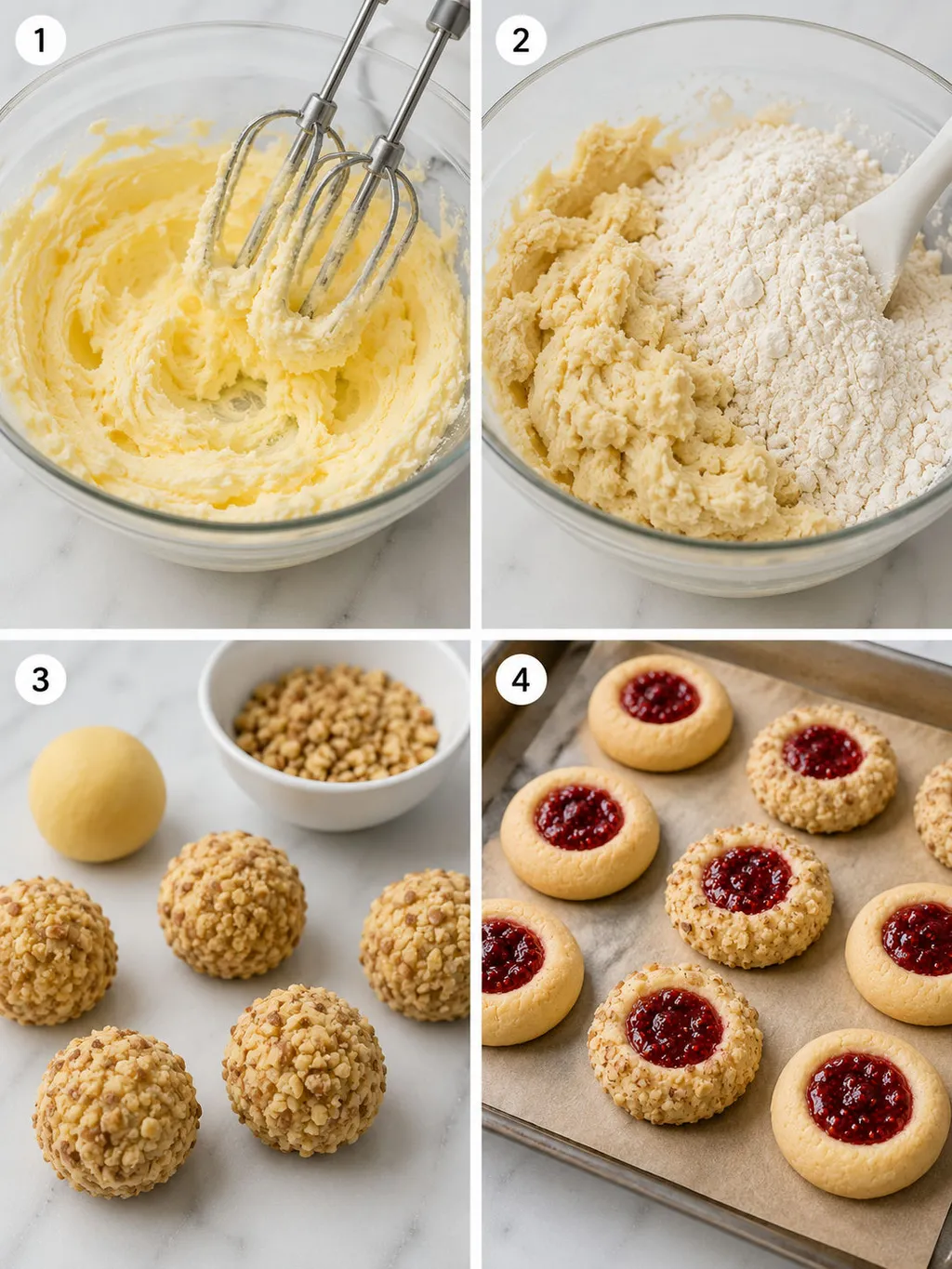
- Cream the butter and sugar. Beat softened butter with sugar for 2-3 minutes until pale and fluffy, this builds the tiny air pockets that keep the cookies tender.
- Add the yolks and vanilla. Mix in the egg yolks one at a time, then the vanilla, scraping the bowl so everything blends evenly.
- Bring in the flour and salt. Add the flour and salt in two additions, mixing just until a soft dough forms. Overworking it here toughens the crumb.
- Chill the dough. Wrap it and refrigerate for at least 30 minutes. Cold dough holds a clean thumbprint instead of collapsing.
- Shape and coat. Roll into 1-inch balls. If using the walnut coating, roll each ball in whisked egg white, then chopped walnuts, before placing on the sheet.
- Press and fill. Make a deep well in the center of each ball with your thumb, then spoon in about a half teaspoon of jam.
- Bake until golden. Bake at 350°F (175°C) for 14-16 minutes, until the edges are pale gold and the jam is just bubbling. Cool on the sheet for 5 minutes before moving to a rack.
Why the Dough Has to Rest Cold
Skipping the chill is the most common reason these cookies spread flat and lose their well. Cold butter fat melts slower in the oven, so the dough holds its shape long enough for the edges to set before it can spread. The same logic is behind creaming butter and sugar properly in the first place, a technique King Arthur Baking covers well if you want the science behind it.
If your kitchen runs warm, chill the shaped, filled cookies on the tray for another 10 minutes before they go in the oven. It costs almost nothing and makes the difference between a cookie with a defined jam well and one that's spread into a puddle.
Picking a Jam That Won't Weep
Thin jams turn into a sugary lake in the oven and boil over the sides. Look for a jam labeled thick-set, or one you'd struggle to pour, raspberry, apricot, and plum powidła all hold their shape well. If all you have is a runny jam, simmer a few tablespoons in a small saucepan for 3-5 minutes to reduce it before filling, then let it cool slightly so it doesn't melt the dough on contact.
Tart fruit flavors work best against this rich, buttery dough. If you love a fruit-forward Polish dessert, the same instinct shows up in ryż z jabłkami, where baked cinnamon apples balance a plain rice base the same way jam balances this shortbread.
The Walnut Coating and Other Swaps
Rolling the dough balls in egg white and finely chopped walnuts before baking is the traditional Polish touch, it adds a toasty crunch around the soft jam center. Pecans or hazelnuts work just as well if that's what's in your pantry, and a version without any nut coating at all is just as authentic if you're feeding someone with an allergy.
For the filling, don't feel locked into jam. A small spoonful of Nutella, lemon curd, or a firm cream cheese and sugar mix all hold up in the well. If you like the idea of a cream-cheese-based Polish cookie, kołaczki z serkiem śmietankowym uses that same filling in a different dough.
Storing, Freezing, and Serving the Batch
Baked cookies keep at room temperature in an airtight container for up to 5 days, with parchment between layers so the jam centers stay put. For longer storage, freeze the baked cookies in a single layer, then transfer to a freezer bag for up to 2 months, and let them thaw at room temperature before serving.
You can also freeze the shaped, unbaked, unfilled dough balls and fill them fresh before baking, which is handy if you're prepping ahead for a holiday cookie platter. Raw dough with egg yolk should still be handled and stored the way any egg-based dough is, chilled promptly and used within a few days, per general USDA food-safety guidance on egg products.
These sit naturally next to other Polish baked staples, a slice of polish chałka or a warm cup of tea, on a holiday table.
Najczęściej zadawane pytania
- Can I make the dough ahead of time?
Yes, and it actually helps. Wrap the dough tightly and refrigerate up to 3 days, or freeze it up to 2 months. Let a frozen block thaw overnight in the fridge before shaping so it's still cold but pliable.
- What jam works best for thumbprint cookies?
Reach for a thick, low-water jam like raspberry, apricot, or plum powidła. Thin, syrupy jams boil over and run down the sides. If your jam is loose, simmer it in a small pan for a few minutes to thicken before filling.
- How do I store baked dżemowe oczka?
Keep them in an airtight container at room temperature for up to 5 days, layered between parchment so the jam centers don't stick together. They also freeze well, unfilled or filled, for up to 2 months.
- Why did my cookies crack around the thumbprint?
Cracking usually means the dough was too cold or too dry when you pressed it. Let chilled dough sit at room temperature for 5-10 minutes before shaping, and pinch any cracks closed with warm fingers before adding the jam.
- Can I use whole eggs instead of just yolks?
You can, but the texture changes. Egg yolks alone give a tender, sandy shortbread crumb, while whole eggs add extra liquid that makes the dough softer and the baked cookie slightly more cakey. Yolks are the traditional choice here.
- Are these the same as American thumbprint cookies?
They're close cousins. The Polish version leans on a firmer, egg-yolk-rich shortbread dough and is often rolled in finely chopped walnuts before baking, a step American thumbprints don't always include.